
Rising component costs have already pushed several smartphone companies toward higher prices in 2026, but Apple may be preparing a different strategy for the iPhone 18 lineup.
According to recent industry reports, the company is expected to keep the starting prices of at least some iPhone 18 models relatively stable, even as memory and storage costs continue climbing across the tech industry.
For buyers worried about another major flagship phone price jump, that could be one of the biggest pieces of good news surrounding Apple’s next iPhone release.
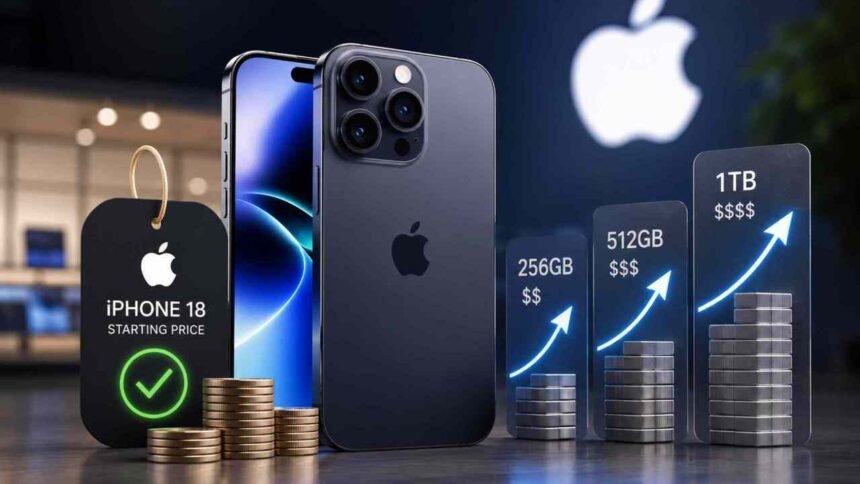
Analysts believe Apple may try to avoid shocking consumers with large headline price increases on the base iPhone 18 Pro models. Instead, the company could shift more aggressive pricing toward higher storage tiers and premium configurations.
That approach would allow Apple to advertise familiar starting prices while quietly increasing revenue from users who choose larger storage options.
The strategy mirrors moves already seen across the smartphone market this year.
Samsung, for example, held pricing steady on some flagship Galaxy devices while introducing increases across upgraded storage versions and newer foldable models. Several Galaxy products also received additional price hikes months after launch.
But Apple may have more flexibility than companies that depend heavily on hardware profits alone.
One reason is Apple’s rapidly growing services business.
While the iPhone remains Apple’s biggest revenue generator, the company now earns tens of billions of dollars each quarter from subscriptions, cloud services, app sales, and digital offerings tied to its ecosystem.
That gives Apple more room to keep hardware pricing competitive compared to manufacturers that rely more directly on phone margins.
Google has been following a similar path with its Pixel devices.
Despite ongoing memory shortages and rising component costs, Google has repeatedly discounted Pixel phones and focused heavily on using hardware to drive users toward AI services and subscriptions.
Industry watchers believe Apple could use a similar balancing act for the iPhone 18 generation, at least temporarily.
The bigger issue affecting the entire smartphone market is memory pricing.
Analysts have warned that the cost of DRAM and storage chips could continue rising through 2026 and even into 2027 as global supply pressures continue affecting electronics manufacturers.
That means Apple may eventually have little choice but to raise prices more broadly in future iPhone generations.
For now, though, early signs suggest the company wants to avoid the kind of visible price shock that can hurt consumer demand during uncertain economic conditions.
Instead of dramatically increasing the advertised starting price of the iPhone 18, Apple may rely on more subtle pricing shifts:
- higher storage upgrade costs,
- pricier premium models,
- bundled accessories,
- or expanded service subscriptions.
For many buyers, that could make the next iPhone launch feel less painful, even if the overall cost of owning a premium smartphone continues creeping upward behind the scenes.
The strategy also highlights a larger trend in the tech industry: companies are increasingly using ecosystems, subscriptions, and AI services to offset hardware pressure rather than relying entirely on direct device profits alone.
Also read: Hackers Just Disrupted Thousands of U.S. Schools Through One Education Platform.
- Why Instagram Reach Feels Broken in 2026 — And What Actually Still Works

- These 7 Instagram Algorithm Tricks Are Working Surprisingly Well Right Now
- Thousands of KeyBank Customers Suddenly Lost Access to Their Accounts This Weekend
- Microsoft’s $1 Billion AI Data Center Plan in Africa Has Hit a Major Roadblock
- These 3 Hidden TikTok Signals Matter Most for Going Viral in 2026
- Verizon’s Budget Carrier Just Added Disney+ and Global Roaming to Its Unlimited Plans