
A growing number of Instagram creators are asking the same question in 2026:
Why does it suddenly feel impossible to reach people organically?
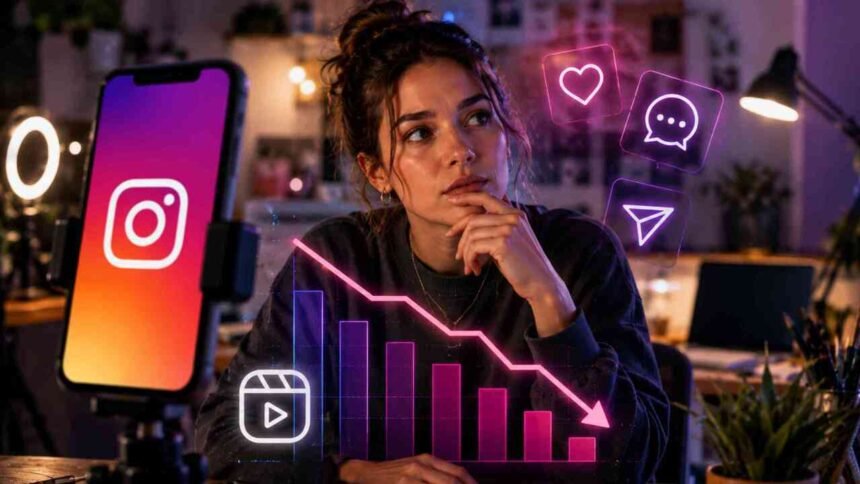
Across Reddit threads, creator communities, and social media forums, users say Instagram’s algorithm feels more unpredictable than ever. Some creators claim their posts barely reach existing followers anymore, while others say hashtags that once drove steady traffic now seem almost useless.
For smaller creators especially, the frustration is becoming impossible to ignore.
But despite the complaints, certain patterns are starting to emerge among accounts that are still growing consistently on Instagram.
And most of them have very little to do with follower count.
One of the biggest shifts is that Instagram now appears to prioritize retention and interaction over raw posting frequency.
In simple terms: the platform cares less about how often you post and more about whether people actually stop scrolling when they see your content.
That’s one reason Reels continue outperforming static image posts for many creators.
Short-form videos are still the easiest way to reach people who do not already follow your account, especially when the content creates fast curiosity or emotional reactions in the opening seconds.
Creators seeing stronger reach in 2026 are increasingly:
- showing the final result immediately,
- posting behind-the-scenes clips,
- using faster pacing,
- focusing more on storytelling than polished perfection.
Also read: These 3 Hidden TikTok Signals Matter Most for Going Viral in 2026.
For artists, process videos are continuing to outperform finished artwork alone.
Many creators say audiences respond better when they can see sketches, mistakes, painting progress, editing timelines, or real creative moments instead of just a perfectly finished post dropped into the feed.
Another major change involves hashtags.
Hashtags still matter, but not in the same way they once did.
Instagram’s recommendation system has become much better at understanding video content automatically through captions, audio, visuals, and viewer behavior. That means stuffing posts with large generic hashtags is becoming less effective than using highly relevant keywords and natural captions.
Many creators are now treating Instagram more like a search engine than a traditional social platform.
Search-friendly captions, niche topics, and clear video themes are increasingly helping content surface in recommendations and search results.
Consistency also matters more than most creators realize.
One of the biggest mistakes smaller accounts make is disappearing for weeks or months and then expecting immediate reach after a couple of uploads. Instagram’s system appears to reward creators who maintain steady activity over time, even if every post is not a viral hit.
But perhaps the biggest shift happening on Instagram is psychological.
The platform is no longer rewarding content simply because it looks aesthetically perfect. Instead, engagement increasingly comes from content that feels human, emotionally relatable, useful, or entertaining enough to hold attention.
That’s why many creators are seeing better results from:
- casual talking videos,
- relatable creator frustrations,
- niche humor,
- storytelling,
- tutorials,
- authentic behind-the-scenes content.
Some creators are also diversifying beyond Instagram entirely.
Apps like Cara and other creator-focused platforms are gaining attention among artists frustrated with Instagram’s shrinking organic reach. Still, most creators continue using Instagram because of its massive audience size and built-in discovery ecosystem.
The reality is that organic growth on Instagram in 2026 is harder than it was a few years ago.
Competition is higher. Content volume is overwhelming. And the algorithm is increasingly selective.
But creators who adapt to how people actually consume content now — faster pacing, stronger hooks, more personality, and better retention — are still finding ways to grow without relying entirely on paid promotion.
For many creators, the biggest realization is this:
Instagram’s algorithm is no longer rewarding the prettiest content. It’s rewarding the content people cannot stop watching.
Also read: These 7 Instagram Algorithm Tricks Are Working Surprisingly Well Right Now.
- Why Instagram Reach Feels Broken in 2026 — And What Actually Still Works

- These 7 Instagram Algorithm Tricks Are Working Surprisingly Well Right Now
- Thousands of KeyBank Customers Suddenly Lost Access to Their Accounts This Weekend
- Microsoft’s $1 Billion AI Data Center Plan in Africa Has Hit a Major Roadblock
- These 3 Hidden TikTok Signals Matter Most for Going Viral in 2026
- Verizon’s Budget Carrier Just Added Disney+ and Global Roaming to Its Unlimited Plans